Let’s be honest. For years, reviewing your poker hands meant staring at a static history, maybe running a few equity calculations, and relying heavily on gut feel and forum advice. It was a bit like navigating a dense forest with just a compass and a hunch. Well, the landscape has changed. Dramatically.
Today, artificial intelligence and game theory optimal (GTO) solvers have given us a satellite map. They don’t just show the path; they reveal the entire terrain. But here’s the catch: having the map isn’t the same as knowing how to read it. That’s where true skill comes in—the art and science of solver output interpretation.
From Gut Feel to Data Grid: What Solvers Actually Do
First, let’s demystify the tool. A GTO solver isn’t some magic box that spits out “the perfect play.” It’s a brutally complex piece of software that calculates Nash equilibrium strategies for a specific, simplified poker scenario you feed it. Think of it as the ultimate, unbiased chess engine for a single, frozen moment in a hand.
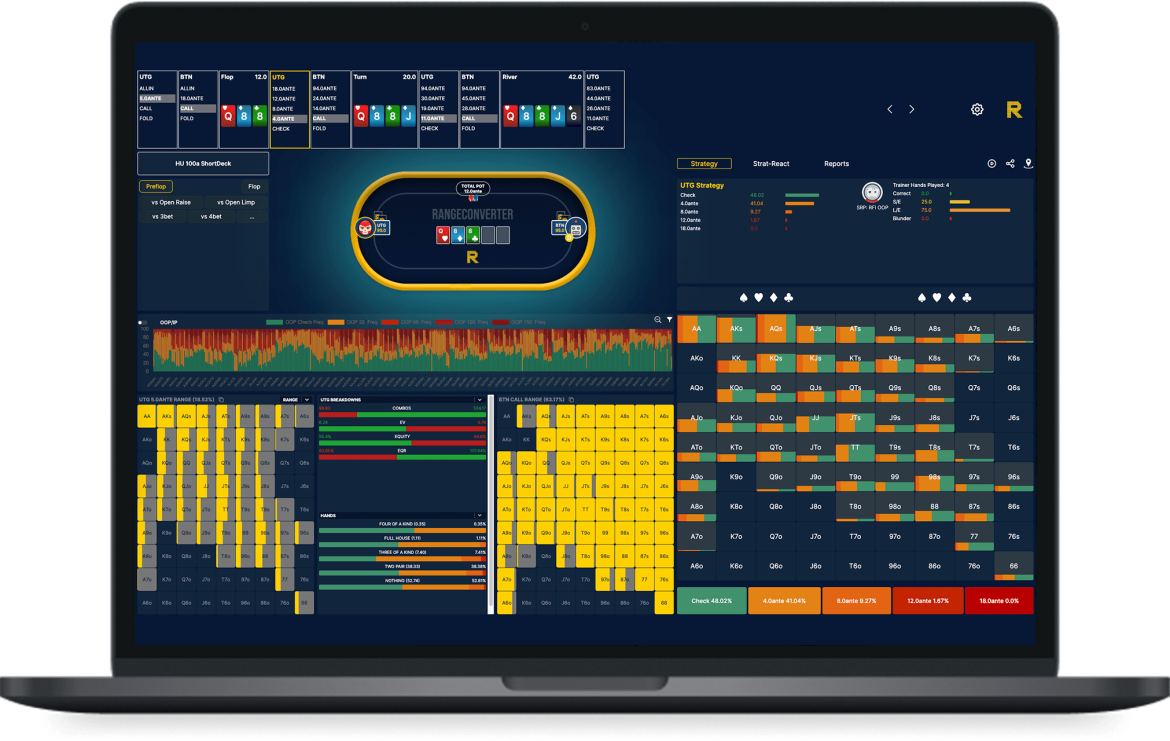
You input variables: stack sizes, positions, bet sizes, and ranges (your best guess at what cards each player could have). The solver then grinds through billions of simulations to find a strategy that cannot be exploited by an opponent also playing perfectly. The output? Often a massive, colorful spreadsheet of data showing what to do with every single hand in your range—bet 75% of the time, check 25%, fold 10%, etc.
The Raw Output: A Beautiful, Bewildering Mess
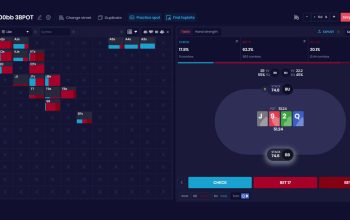
And this is where most players hit a wall. The initial solver output can be overwhelming. You’re presented with:
- Range Advantage Graphs: Color-ceded charts showing who “owns” the board.
- Frequency Matrices: Precise percentages for actions (bet, check, raise) with every conceivable hand.
- Equity Distributions: A visual breakdown of how strong each player’s range is on this specific card.
It’s a firehose of information. The rookie mistake is to look for a single answer—”Ah, the solver says to bet 76% here with Ace-King!”—and robotically apply it. That’s a fast track to confusion, honestly. The solver’s real lesson isn’t in the single percentage; it’s in the pattern.
Interpreting the Patterns: The Human Element
This is the core of modern hand history analysis. You’re not a computer. You’re a human at a table, often against other humans who aren’t playing perfectly. Your job is to translate the solver’s equilibrium blueprint into a flexible, exploitative strategy. Here’s how that thinking goes.
1. Understanding “Why” Behind the “What”
Don’t just see that a bet is recommended. Ask why. Is the solver betting for value with strong hands, as a bluff with weak ones, or as a “protection” bet with middling hands? Look at the range construction. Which specific hands are chosen for which actions? You’ll start to see that, say, the solver uses some backdoor flush draws as bluffs while checking back other, seemingly similar draws. That reveals the nuanced value of blockers and equity realization—concepts you can then feel in your bones.
2. Identifying Strategic Benchmarks and Tendencies
Solvers are fantastic for establishing benchmarks. They answer questions like: On this scary river card, what portion of my value range should I actually bet? How wide can I bluff here if my opponent folds too much? You start to internalize frequencies.
For instance, you might learn that on a blank river, a balanced player should bet about 2/3 of the time for a small size. Now, when you review your own hand history and see you’re betting 90% of the time in those spots, you’ve found a massive leak. It’s like a diagnostic tool for your strategic tendencies.
3. Navigating the Gray Areas: Exploitation
This is where AI analysis truly shines in practical terms. Let’s say the solver says to check back a medium-strength hand 100% of the time on the turn. But you know your opponent calls too much on later streets. The solver’s “perfect” check might be wrong for this specific opponent.
By understanding the solver’s rationale—”I check because I’m vulnerable to raises and can get value on rivers”—you can make an informed choice to deviate. You might bet, knowing the opponent’s tendency makes it profitable. The solver didn’t give you the answer; it gave you the foundational knowledge to build a better, exploitative answer yourself.
A Practical Walkthrough: Analyzing a Common Spot
Imagine you raise with A♠ Q♠ from the button and get called by a tight big blind. The flop comes J♠ 8♦ 2♣. You c-bet and get called. The turn is the 7♠, bringing a flush draw. You bet again, called. The river is the K♥, completing no obvious draw. You…?
Old-school analysis: “I have Ace-high, missed my draw. I guess I give up.”
Solver-informed analysis: You run the spot. The solver likely shows a mixed strategy here. You’ll see it bets some Ace-high hands as bluffs, specifically those with the A♠ (because it blocks the nut flush draw the opponent might have called with). It might check back other Ace-highs. The key insight? Your hand, with the specific A♠, is a better bluff candidate than A♥Q♦ because of that blocker effect. The decision shifts from “I have nothing” to “I have a strategically optimal bluffing hand given the range dynamics.” That’s a paradigm shift.
The Limits and The Future
It’s not all rosy, of course. Solvers have real limits. They work with simplified, “node-locked” scenarios. They assume perfect play from opponents. They can’t account for the meta-game, table dynamics, or human tilt. Relying on them without interpretation creates rigid, predictable players.
The next wave? It’s already here: AI-powered hand history aggregators and leak-finding tools. These don’t just solve one spot; they analyze your entire database, compare your frequencies to GTO or population benchmarks, and pinpoint your systemic errors. “You fold to river check-raises 10% more than optimal,” they might say. This moves you from analyzing single hands to auditing your entire strategic profile.
In the end, think of AI and solvers not as oracles, but as the most brilliant, detail-obsessed coach you could ever hire. They show you the mathematical fabric of the game. But you’re the one who has to cut and sew that fabric into a garment that fits the actual, messy, imperfect player sitting across from you. The tool doesn’t play poker. You do. And now, you’re playing with a deeper understanding than ever before.