Let’s be honest. The classic bingo card, with its predictable B-9 and O-70, is a blast. But it’s not exactly… personal. What if you could transform that simple grid into something uniquely yours? A tool that turns a family reunion from awkward small talk into a laughter-filled scavenger hunt. Or a classroom lesson from a slog into a game students beg to play again.
That’s the magic of DIY bingo card creation. It’s not just about making a game; it’s about crafting an experience. And the best part? You don’t need to be a graphic designer or a software whiz. With a bit of creativity and the right approach, you can build custom bingo cards for any occasion. Let’s dive in.
Why Go DIY? Beyond B-9 and O-70
Sure, you can download a generic template. But a personalized bingo card does something profound: it speaks directly to your audience. For events, it becomes a conversation starter and a memory tracker. For education, it shifts from rote memorization to active, engaged learning. It’s the difference between a one-size-fits-all t-shirt and a tailor-made suit. The fit is just better.
Think about the current pain points. Keeping guests mingling at a wedding. Making a corporate training session actually stick. Reviewing vocabulary with a kid who’s glued to a tablet. A well-designed DIY bingo card tackles these head-on, injecting playfulness and purpose.
The Core Ingredients of Your Card
Every bingo card, at its heart, has three key elements:
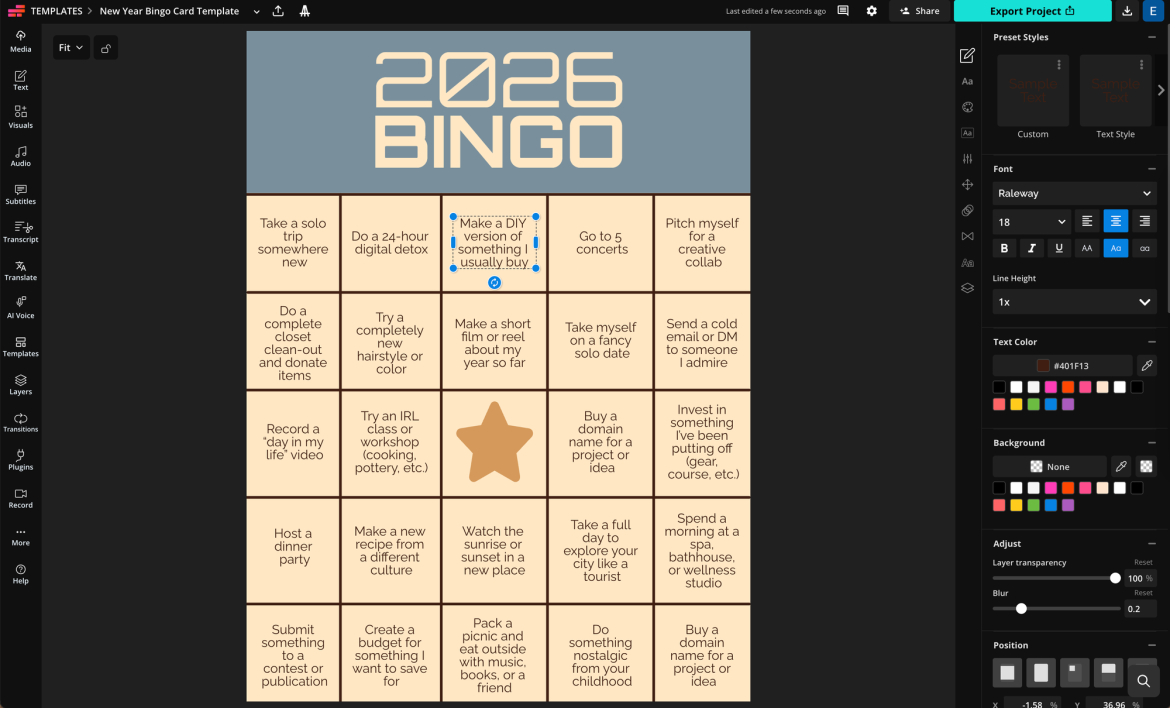
- The Grid: The classic 5×5 square is the standard, with the center often a free space. But for younger kids or quicker games, a 3×3 or 4×4 grid works wonders.
- The Content: This is where your personality shines. Instead of numbers, you fill the squares with words, phrases, pictures, or even math problems.
- The Call-Out List: This is the master list of all possible items that appear on the cards. For true DIY bingo, you’ll randomize these so every player’s card is unique.
Crafting Cards for Personalized Events: A Game-Changer
Imagine a wedding where guests aren’t just sitting at tables, but are gently guided to capture moments: “Aunt Mary tears up,” “The couple’s first dance,” “Someone loses a shoe.” Suddenly, everyone is part of the story. That’s the power of event bingo.
Here are a few ideas to get your creative juices flowing:
- Baby Shower Bingo: Fill squares with common gifts (onesies, rattles) or phrases from well-wishing cards (“He has your eyes!”).
- Office Party Icebreaker Bingo: “Has visited more than 3 countries,” “Knows how to code,” “Brings homemade lunch.” It’s networking disguised as fun.
- Holiday Gathering Bingo: Classic family tropes are perfect here. “Uncle tells the same story,” “Dog steals food from table,” “Discussion about the correct gravy recipe.” You know, the good stuff.
The key is specificity. The more inside the joke or tailored to the event, the bigger the hit. It makes people feel seen and in on the fun.
Educational Bingo: Learning Disguised as Play
This is where DIY bingo creation truly shines as a versatile teaching tool. Our brains are wired to remember things within a game context. It’s called engagement, frankly. You can adapt this for almost any subject or age group.
| Subject | Square Content Ideas | Learning Goal |
| Vocabulary | Words, definitions, synonyms | Word recognition & meaning |
| Math | Equations (e.g., 5×3), the answers go on the call sheet | Fact fluency & problem-solving |
| Science | Element symbols, parts of a cell, animal classifications | Memorization & categorization |
| History | Dates, key figures, event names | Recall & association |
| Foreign Language | Spanish word, English translation in call list | Vocabulary & translation skills |
For younger learners, use pictures. A bingo card for animal sounds or simple sight words is incredibly effective. The physical act of marking a square helps cement the knowledge—it’s tactile, visual, and auditory if you’re calling out clues.
Your Step-by-Step Creation Guide (No Fancy Tools Needed)
Alright, here’s the deal. You can go super simple or a bit more tech-savvy. Let’s start with the universal method.
- Brainstorm Your Content. List out 30-40 items for your master call-out list. For a 5×5 card with a free space, you need at least 24 unique items to populate different cards.
- Build Your Grid. Use a word processor (like Google Docs or Word), a simple spreadsheet, or even just draw it by hand. Table tools are your friend here.
- Randomize, Randomize, Randomize. This is the crucial DIY step. Manually shuffle your list and place items into the grid squares in a different order for each card. For more than a few cards, a quick online search for “bingo card generator” will save your sanity—just input your custom list and let it do the shuffling.
- Design & Distribute. Add a title, maybe a fun border or relevant clipart. Print them out or, for virtual events, save them as PDFs to share. For classrooms, laminating cards lets you use dry-erase markers for endless replay.
And don’t stress about perfection. A slightly wonky hand-drawn card at a family BBQ has its own charming authenticity. The goal is fun and connection, not pixel-perfect design.
Pro Tips to Elevate Your DIY Bingo Game
Want to take it up a notch? Keep these ideas in your back pocket.
- Theme the Free Space. Instead of just “FREE,” make it “FREE (Like the Cake at This Wedding)” or “FREE Hypothesis.”
- Mix Media. Create a “sound bingo” for a car trip—play snippets of songs from a playlist and players mark the title.
- Think Beyond “Bingo.” The format is flexible. Aim for a blackout (full card) for longer events, or just a simple line for a quick classroom review.
- Prizes Matter. For kids, extra recess time or a pick from a treasure chest is gold. For adults, a good bottle of wine or a silly trophy works wonders. The incentive doesn’t have to be big, just thoughtful.
Honestly, the only real mistake you can make is not trying it. The barrier to entry is so low, and the payoff is so high.
The Real Win Isn’t Just a Full Card
When you create a DIY bingo card, you’re doing more than killing time. You’re architecting engagement. You’re weaving together a shared experience that gets people looking, listening, and connecting with the moment in front of them—whether that moment is a history lesson or a grandfather’s toast.
It’s a reminder that the frameworks we use every day, like a simple game of chance, are just waiting to be infused with our own stories, our own lessons, our own inside jokes. So grab a piece of paper, or open a blank document, and start listing out the pieces of your world. Then watch as those pieces come together, square by square, in a chorus of shouts and a single, satisfying word: Bingo.