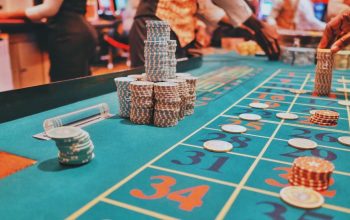

Walk into a casino in Macau, then one in Las Vegas, and finally a gaming hall in Berlin. You might think you know the rules of the games on the floor—but you’d often be wrong. The truth is, the world of casino gaming is a patchwork of local tastes, historical quirks, and cultural nuances. It’s less a universal language and more a series of fascinating regional dialects.
Let’s dive into how some of the most popular casino games morph as they cross continents. Understanding these variations isn’t just trivia; it’s essential for any player looking to game confidently, whether online or on a global trip.
The Cultural Fabric of Gaming: Why Regions Differ
First off, why do these differences even exist? Well, it’s a mix of history, superstition, and pure market preference. In Asia, games often emphasize strategy, social interaction, and specific number symbolism (the number 8, for instance, is hugely lucky). European games, particularly in places like France and Germany, can have roots in centuries-old parlor games, with a focus on nuanced rules and lower house edges. North America? It’s a blend of innovation and spectacle, where speed, big jackpots, and the “entertainment factor” often win the day.
Blackjack: 21… Or Is It?
Blackjack seems simple: get to 21. But the devil—and the dealer’s advantage—is in the details.
North American Style
In most U.S. and Canadian casinos, you’re playing a fairly standard game. The dealer typically stands on all 17s (including soft 17 in many places), and players can double down on most two-card hands, split pairs, and sometimes surrender. It’s a player-friendly setup designed for clear, fast-paced action.
European (U.K. & Mainland) Twist
Here’s a big one: in much of Europe, the dealer takes only one card face up initially. Players must make all their decisions—hitting, doubling, splitting—before the dealer draws their second card. This “no hole card” rule changes the risk calculus, especially when you’re considering a double down or split. A bad beat feels worse when you’ve doubled your bet only to see the dealer pull a blackjack you couldn’t have known about.
Asian Adaptations
In places like Macau, you’ll find both international and unique regional rules. But the real story is the atmosphere. Games can be louder, more social, and sometimes involve side bets based on lucky numbers or specific card combinations that resonate with local beliefs. The core game is familiar, but the flavor is distinctly local.
Roulette: The Wheel of Fortune Spins Differently
If one game symbolizes regional variation, it’s roulette. The wheel itself tells the story.
| Region | Wheel Type | Key Feature | House Edge |
| North America | American | Double zero (0, 00) | ~5.26% |
| Europe & U.K. | European | Single zero (0) | ~2.70% |
| France (e.g., Paris) | French | Single zero + “La Partage” rule* | ~1.35% |
*La Partage: This is a game-changer. On an even-money bet (like red/black), if the ball lands on zero, you lose only half your bet. It effectively cuts the house edge in half. It’s a massive player advantage you simply won’t find on the standard American wheel.
So, a player in Atlantic City is facing nearly four times the house edge on a straight roulette bet compared to a player in Deauville. That’s not a minor detail—it’s the core of your strategy.
Baccarat: The King of Cards and Its Many Courts
Baccarat is the ultimate tale of two—or three—games. In fact, comparing regional baccarat variations is like following a family tree with very distinct branches.
- Punto Banco (Americas, U.K., Australia, Macau): This is the version most people know. It’s purely a game of chance; the player has no decisions to make after bets are placed. The rules dictate all draws. It’s fast, it’s dramatic, and it dominates the high-limit rooms in Vegas and Macau, where it’s often played with an almost ritualistic intensity.
- Chemin de Fer (France): Here’s where strategy comes roaring back. Players take turns being the “banker,” competing against the other players at the table. The banker can choose whether to draw a third card based on their hand and intuition. It’s more strategic, more social, and feels more like a classic card game than its automated cousin.
- Baccarat Banque: Similar to Chemin de Fer, but with a permanent banker for the entire shoe. It’s less common but highlights the European preference for games with a social, strategic layer.
The takeaway? In North America and Asia, baccarat is a spectacle of fate. In Europe, it remains, in some forms, a game of nuanced decisions.
Slot Machines: A Study in Sensory Preferences
Slots might seem universal, but their design philosophy shifts dramatically. Honestly, it’s all about what players in each market expect from their “pull.”
North America: Think big, bold, and bonus-heavy. Progressives with life-changing jackpots, elaborate free-spin rounds with mini-games, and themes ripped from blockbuster movies. It’s immersive entertainment that happens to be a game of chance.
Europe (especially the U.K. & Nordics): There’s a stronger focus on transparency and, believe it or not, a lower volatility style sometimes. You’ll see clearer RTP (Return to Player) displays, simpler bonus structures, and a prevalence of “fruit machine” style games that harken back to a longer history. The fun is often in the straightforward mechanics, not just the Hollywood razzle-dazzle.
Asia (particularly land-based in Macau & Singapore): The machines here are often about luck symbolism and high-stakes thrill. You’ll find games packed with lucky symbols—8s, gold, dragons—and a higher concentration of high-limit machines designed for serious players. The audio-visual experience is intense, but the themes are deeply rooted in cultural motifs of fortune and prosperity.
Poker: The Underlying Framework
While Texas Hold’em is a global standard, the casino-provided poker games show subtle shifts. In European poker rooms, you might find more “Pot Limit” Omaha alongside Hold’em, reflecting a preference for more complex, drawing-heavy games. In Asia, games like “Open Face Chinese Poker” have carved out niche popularity, starting as a casual game before hitting some casino floors. The house-banked table games (like Caribbean Stud or Three Card Poker) also see rule tweaks—ante bonuses and pay tables can vary slightly, shifting the house edge a point or two depending on your location.
Why This All Matters for You
Sure, you can just sit down and play. But knowing these variations is power. It prevents costly misunderstandings at the table. It helps you choose the game with the best odds—always pick the single-zero roulette wheel if you have the option! And for the online player, it clarifies what you’re actually playing. That “French Roulette” table in your app isn’t just a theme; it’s a mathematically superior product to the “American” one.
Ultimately, these regional casino game variations are a reminder that gaming is a cultural artifact. It’s shaped by people, history, and local desire. The next time you place a bet, anywhere in the world, you’re not just playing a game—you’re engaging with a little piece of that region’s story. And understanding that story might just be the smartest bet you can make.