That hypnotic spin. The clatter of the ivory ball. The collective breath held around a velvet-lined table. The roulette wheel is more than a casino game—it’s a cultural artifact, a piece of engineering, and a global citizen with a surprisingly messy passport. Its story isn’t just about numbers and odds; it’s about human ingenuity, continental divides, and the eternal allure of chance. Let’s dive into its whirlwind history and the fascinating variations that evolved as it traveled the world.
Origins: A Tale of Two (or Three) Inventors
Like many great stories, the origin of roulette is shrouded in a bit of mystery—and maybe a dash of legend. Most historians point the finger, politely, at a 17th-century French polymath named Blaise Pascal. Here’s the deal: Pascal wasn’t trying to invent a gambling game. He was on a quest to create a perpetual motion machine. His experiments with spheres and rotating discs failed to defy physics, but they accidentally created the perfect prototype for a betting wheel.
That said, the game’s DNA has older relatives. There were Roman soldiers spinning chariot wheels, and there was an English game called “Roly-Poly” and an Italian one named “Biribi” that involved betting on numbered pockets. Honestly, roulette feels like a brilliant Frankenstein’s monster, stitching together these older concepts onto Pascal’s elegant wheel. By the late 18th century in Paris, the game as we’d recognize it—with its red and black pockets and a single zero—was the toast of the aristocracy.
The Great Split: European vs. American Roulette
This is where the plot thickens, and the wheel literally splits. As roulette crossed the Atlantic, it morphed. The version that took root in the casinos of Monte Carlo became the standard for the world—except, notably, for the United States.
The European Wheel: Elegance and Slightly Better Odds
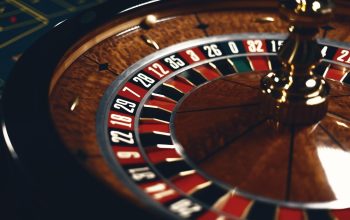
You know the classic. The European roulette wheel has 37 pockets: numbers 1 through 36 (alternating red and black) and a single green zero. This single zero gives the house a relatively modest edge of 2.7%. It’s sleek, it’s sophisticated, and it’s the foundation for most online casino games today. Many European tables also offer the “La Partage” or “En Prison” rules on even-money bets if the ball lands on zero, which effectively cuts the house edge in half on those bets. A player-friendly touch, for sure.
The American Wheel: Hustle and the Double Zero
Now, cross the ocean. Early American casino operators, always looking for an edge—a bigger profit margin—added a second green pocket: the double zero (’00’). This seemingly small change has a huge impact. The American roulette wheel has 38 pockets, and that extra pocket bumps the house edge up to 5.26%. That’s almost double! The number sequence is also arranged completely differently on the wheel itself, a fact often overlooked.
| Feature | European Roulette | American Roulette |
| Number of Pockets | 37 (1-36 + 0) | 38 (1-36 + 0 + 00) |
| House Edge | 2.7% | 5.26% |
| Key Rule Variations | Commonly offers La Partage/En Prison | Typically has no such rule |
| Number Layout on Wheel | Non-sequential, varied | Distinct, opposite sequencing |
Why the difference? Well, the story goes that the double zero was added to increase profits in frontier saloons and riverboat casinos. It stuck. So if you’re playing in Vegas or Atlantic City, you’re almost certainly facing that 00. It’s a testament to how culture shapes games—the European model favoring tradition and slightly better player odds, the American one embracing a bolder, faster-paced hustle.
Beyond the Big Two: Unique Global Variations
But the world of roulette isn’t a simple binary. Travel further, and you’ll find fascinating offshoots that reflect local tastes.
- French Roulette: Often considered the purist’s version. It uses the single-zero European wheel but is steeped in specific etiquette and French terminology on the table layout (like “Passe” and “Manque” for high/low). The “La Partage” rule is most at home here. It feels… older, more formal.
- Mini Roulette: A modern, simplified online variant. It shrinks the wheel down to just 13 pockets (numbers 1-12 and a single zero). The odds and payouts are completely different. It’s faster, simpler, and appeals to those who find the classic game intimidating.
- Multi-Wheel & Lightning Roulette: Here’s where current trends live. Online platforms have supercharged the game. Multi-Wheel lets you bet on the outcome of up to eight wheels spinning simultaneously. Live dealer games like “Lightning Roulette” add random multiplier prizes to numbers, blending game show excitement with classic play. These address the modern pain point of players craving faster, more engaging experiences.
The Wheel as a Cultural Symbol
Beyond the casino floor, the roulette wheel spins through our collective imagination. It’s a potent metaphor for fate, chance, and life’s unpredictability. In film and literature, it symbolizes high-stakes risk—the ultimate gamble. The phrase “Russian Roulette” borrows its terrifying imagery, equating chance with mortal danger.
Its design, a perfect circle of alternating red, black, and green, is instantly recognizable. It represents luck itself, both good and bad. You don’t need to be a gambler to feel its symbolic pull; it’s a shorthand for moments where everything hangs in the balance, waiting for that final, decisive click.
A Final Thought on the Spin
From Pascal’s workshop to the glitter of Monaco, from the riverboats of the Mississippi to the digital servers powering a live dealer stream, the roulette wheel has adapted without losing its soul. Its variations tell a story of geography, economics, and human nature. The European wheel offers a genteel dance with probability. The American version shouts its bigger, brasher odds. The new digital forms fracture and amplify the experience for a new generation.
In the end, every version shares that same mesmerizing core: a spinning wheel, a bouncing ball, and a moment of pure, unadulterated maybe. It’s a reminder that some inventions are so elegantly simple—so perfectly tuned to our fascination with chance—that they become, well, perpetual motion machines of a different sort. Cultural ones. And they show no sign of stopping.