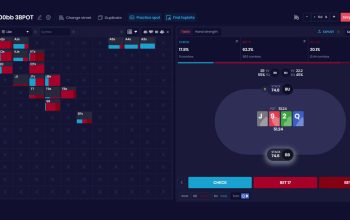

Let’s be honest, the way we play poker has changed. Gone are the days when your only option was a smoky backroom or a trip to Vegas. Now, it’s on your phone, with friends or strangers from across the globe, for play-money chips or real stakes. But this digital shift? It’s created a fascinating, tangled web of legal gray areas and operational headaches.
So, what’s next for these peer-to-peer poker apps and social platforms? The future isn’t just about better graphics. It’s a high-stakes game of regulatory chess, technological innovation, and, frankly, survival. Let’s dive in.
The Legal Labyrinth: It’s a State-by-State Maze
First things first: the law. In the U.S., online gambling regulation is a patchwork quilt sewn by fifty different hands. The federal Wire Act of 1961 still casts a long shadow, but states are increasingly calling their own shots. This creates a bizarre landscape for P2P poker.
For real-money peer-to-peer poker apps, legality is a tightrope walk. They typically need to be licensed in each state they operate in, partnering with existing land-based casinos or tribes in many cases. The model is less “wild west” and more “heavily fortified castle.”
The Social Poker Loophole (And Its Shrinking Size)
Here’s where it gets tricky. Social poker platforms—you know, the ones where you buy virtual chips, can’t cash out, and play for fun—have operated in a sort of regulatory safe harbor. The argument was simple: no real-money prize means it’s not gambling.
But regulators are getting smarter. They’re scrutinizing the “social casino” model, especially the sale of virtual chips and the psychological nudge to keep buying. Some states are already asking tough questions. Is this still just a game, or is it a skinner box disguised as a card table? That pressure is mounting.
Operational Hurdles: More Than Just Dealing Cards
Assuming you navigate the legal minefield, running these platforms is no picnic. The operational future hinges on solving some core challenges.
1. Trust, Security, and the “Black Box” Problem
In a pure P2P model, players are matched against each other. But who ensures the game is fair? The platform’s integrity is everything. The future belongs to apps that can prove their randomness and security—think blockchain-based shuffling or transparent, auditable RNGs (Random Number Generators). Players are skeptical of black boxes. They want a window into the machine.
2. The Bot and Collusion Epidemic
This is the cancer of online poker. Automated bots and player collusion suck the fun—and the profit—right out of the ecosystem. Future platforms will live or die by their detection systems. We’re talking advanced AI that doesn’t just track win rates, but analyzes betting patterns, reaction times, and even subtle behavioral tics that scream “not human.”
3. The Economy of “Fun”
For social platforms, the monetization model is… well, it’s under renovation. Relying solely on selling virtual chips feels increasingly predatory and, as we said, legally risky. The future points toward hybrid models:
- Subscription Access: Pay a monthly fee for a premium experience, tournaments, and no ads.
- Cosmetic & Customization: Selling card backs, table felts, avatars, and outfits. It works for Fortnite, why not poker?
- Skill-Based Tournaments: With entry fees and prizes that are tangible but not cash—like hardware, gift cards, or unique digital collectibles (NFTs, though that’s a whole other can of worms).
The Convergence: Where Social Meets Real Money
Honestly, the most likely future isn’t two separate worlds. It’s a merger. Imagine a platform where you start on the social, play-money tables. You learn, you build a reputation, you join clubs. Then, when you’re ready and you’re in a jurisdiction that allows it, you can enter a “real-money” lobby with the same friends, the same avatar, the same interface.
This seamless transition does two things. It creates a massive, nurtured funnel of players for the real-money side. And it makes the social side feel less like a dead-end and more like a training ground with real social stakes. The technology and user account management for this is complex, sure, but it’s the holy grail.
A Glimpse at the Table of Tomorrow
| Trend | Impact on P2P/Social Poker | The Big Question |
| Stricter “Social Gaming” Laws | Forces monetization away from chip sales. May require geo-fencing and age verification upgrades. | Can platforms pivot fast enough without killing user engagement? |
| AI & Machine Learning | Superior cheat detection, personalized table recommendations, dynamic difficulty for solo play. | Does hyper-personalization make the game less authentic, less random? |
| Cryptocurrency & Blockchain | Enables transparent, fast, low-fee P2P transactions and provably fair gameplay. | Will regulatory bodies ever warm to crypto’s role, or will it remain a niche edge? |
| Virtual & Augmented Reality | The ultimate “social” experience—reading bluffs in a virtual space, playing on your kitchen table via AR. | Is this a true game-changer, or just a flashy gimmick for a game about psychology? |
Look, the core of poker—the bluff, the strategy, the human drama—that’s timeless. But the wrapper is changing faster than a river card changes a pot. The platforms that survive won’t just be the ones with the best lawyers, though that helps. They’ll be the ones that build genuine communities, foster real competition, and above all, earn trust in a digital space where trust is the most valuable chip on the table.
The future of these apps isn’t written in a legal brief or a line of code. It’s being felt out, hand by hand, in the millions of games played every day. The companies that listen to that table talk, they’re the ones who will deal the winning hand.